
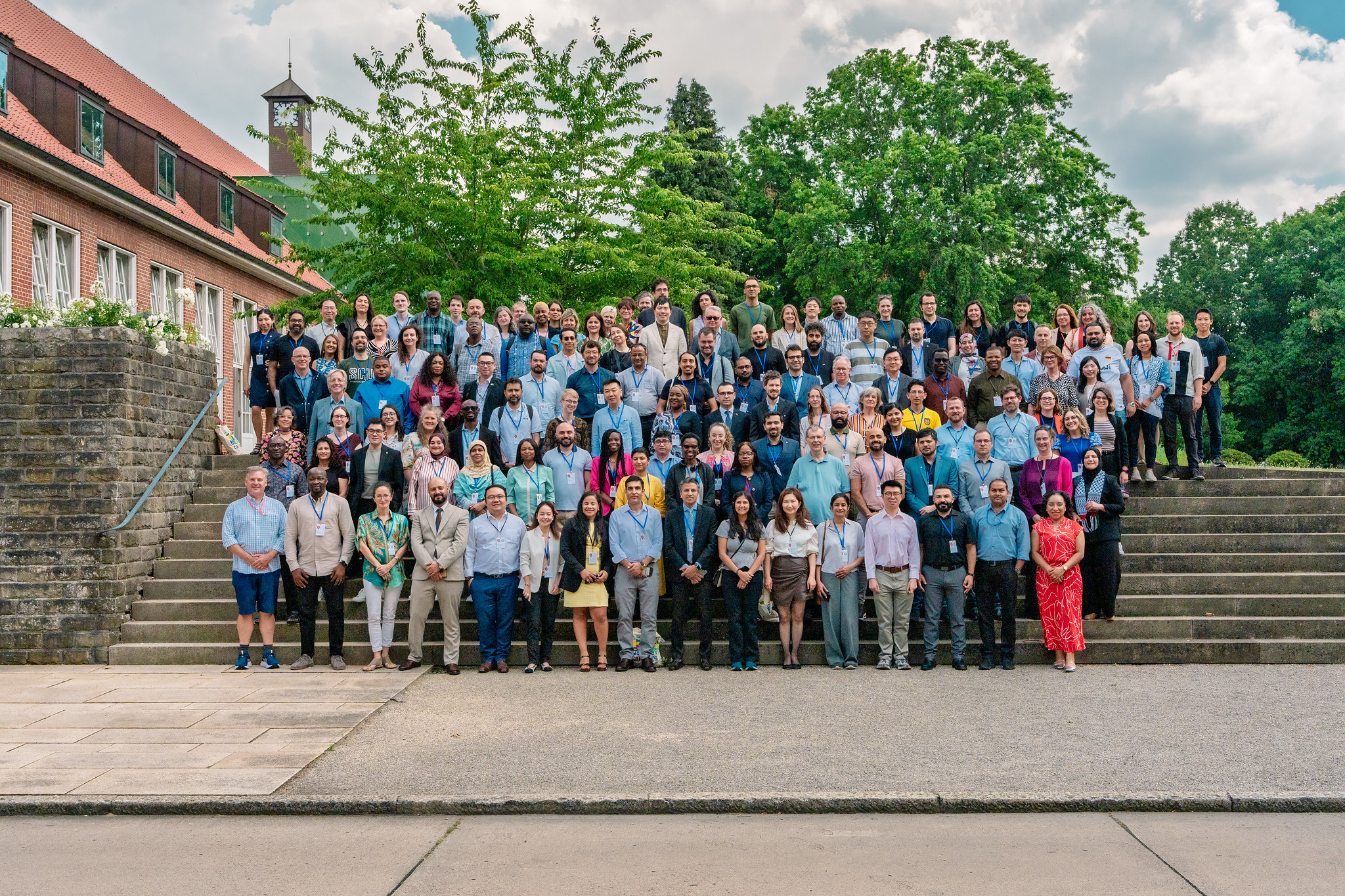
The GYA 2026 Annual General Meeting (AGM) and International Conference of Young Scientists, titled “Machine Intelligence for Society and for All Sciences”, took place from 30 June to 3 July 2026 in Bremen, Germany. More than 200 participants attended, including GYA members and alumni, representatives of Young Academies from around the world, and partners from science policy and other collaborating organisations. The conference provided a forum to discuss the opportunities and challenges that machine intelligence presents for science and society. Alongside these discussions, the conference provided opportunities for participants to build connections across disciplines, sectors, and countries.
The week-long meeting was hosted by Constructor University and planned by a Conference Committee led by GYA members Emilija Stojmenova Duh (University of Ljubljana, Slovenia) and Francesco Maurelli (Constructor University, Germany).
International Conference of Young Scientists
The International Conference of Young Scientists focused on the theme “Machine Intelligence for Society and for All Sciences”. On 29 June, Sir Konstantin Novoselov, Nobel Laureate and President of Constructor University, delivered the opening keynote as part of an INGSA Europe pre-event held ahead of the conference.
GYA Co-Chairs Yensi Flores Bueso (University College Cork, Ireland) and Sam Chan Siok Yee (Universiti Sains Malaysia) formally opened the conference on 1 July, followed by welcome remarks from David S. Rosenblum, Vice President for Research at Constructor University Bremen. He reflected on how generative AI marks a clear divide between the experiences of established and early-career researchers, while highlighting the opportunities it presents for the next generation of scientists.
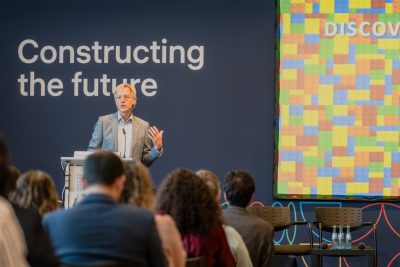 In the subsequent opening address, Robbert Dijkgraaf, President-elect of the International Science Council, argued that young scientists are entering research at a time of exceptional technological change, as AI, gene editing, synthetic biology, quantum science and advanced materials are shifting science from observing and discovering the natural world to actively designing it. He highlighted that scientific progress depends on the free movement of knowledge, researchers and ideas across borders, and called on scientists to defend openness and scientific freedom while engaging actively in public debate and policymaking.
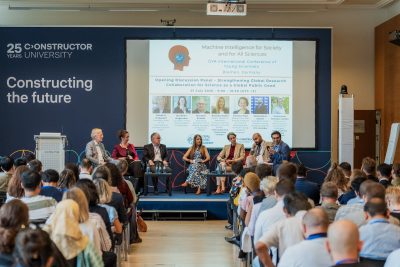
Opening Discussion Panel – Strengthening Global Research Collaboration for Science as a Global Public Good: Following his openig address, Robbert Dijkgraaf joined Marileen Dogterom (Co-Chair of the InterAcademy Partnership), Marcelo Knobel (Executive Director of The World Academy of Sciences (TWAS) and Interim IAP Coordinator), Abdulsatar Sultan (President of the Arab-German Young Academy (AGYA)), Natisha Dukhi (former Co-Chair South African Young Academy of Science (SAYAS)), and Kerstin Pahl (ALLEA board member and member of Die Junge Akademie (Germany)) for the opening panel. The session was moderated by former GYA Co-Chair Michael Saliba (Director of Photovoltaics, University of Stuttgart). Panellists challenged the assumption that scientific collaboration and national interests are necessarily at odds, arguing that global challenges require countries to distinguish carefully between areas of competition and areas where cooperation remains indispensable. They also called for moving beyond “capacity building” towards “capacity sharing”, recognising the Global South as an equal contributor to scientific progress.
Over the following two days, the conference programme featured three further plenary panel discussions and one public dialogue session, focusing on the following discussion points (see the detailed programme here):
Panel I – AI Governance for a Shared Future: Science, Policy, and Global Equity: Panellists argued that governing AI extends far beyond regulation, requiring ethical responsibility, broad participation and meaningful inclusion from the outset. Speakers also cautioned that an increasing reliance on AI and digital datasets could narrow our understanding of the world by overlooking communities and forms of knowledge that remain beyond the digital sphere.
Panel II – Accelerating Discovery: AI’s Transformative Role in Natural Sciences and Engineering: Rather than simply accelerating existing research, speakers argued that AI is enabling scientists to tackle questions that were previously beyond reach, while making high-quality data, domain expertise and experimental validation more important than ever. During the Q&A, the discussion turned to whether AI could narrow scientific creativity by favouring easily modelled problems, which the panel suggested instead encourages researchers to ask better questions, interpret results, and work across disciplines.
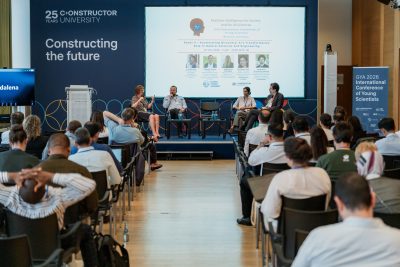
Public Dialogue Session – The Hidden Cost of Knowledge: AI, Publishing Surveillance, and the Future of Open Research: The discussion moved beyond the use of AI in publishing to question the foundations of the current scholarly publishing system itself. Panellists argued that AI is amplifying existing problems – from publication incentives and commercial control of research infrastructure to barriers to open science – and encouraged early-career researchers to become active contributors to publishing reform.
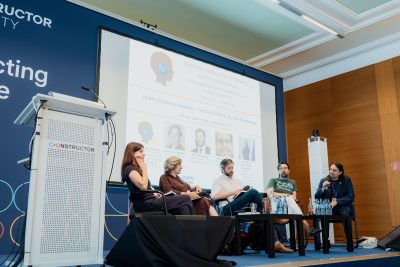
Panel III – AI at the Core of Disciplinary Foundations in the Humanities and Social Sciences: The discussion explored how AI is reshaping not only research methods but also the questions and disciplines themselves, from law and psychology to international relations. Alongside concerns about data quality, critical thinking and AI-generated content, panellists highlighted the need for technological literacy and more diverse datasets and infrastructures to avoid reinforcing Western perspectives in AI-driven research.
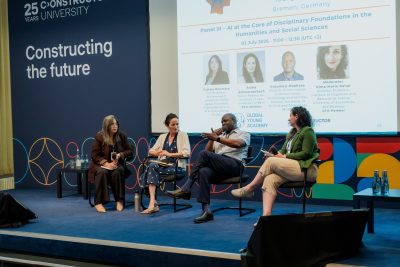
We thank all panellists and moderators for these stimulating discussions and for exploring the opportunities and challenges that AI presents for the next generation of researchers!
Research Talks: The GYA Member Research Talks showcased the breadth of research across the Academy, with GYA members and alumni presenting their work in a series of short talks. Covering a wide range of disciplines, the presentations gave participants and the wider public an opportunity to learn about one another’s research, exchange ideas during the Q&A sessions, and identify opportunities for future collaboration. All research abstracts are available here.
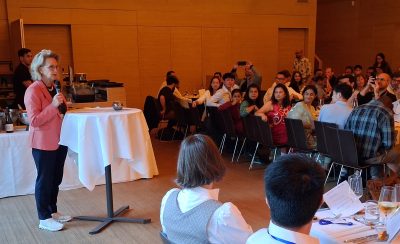
The social programme included a gala dinner on Wednesday featuring a performance by a Bremen shanty choir and an address by Bettina Rockenbach, President of the German National Academy of Sciences Leopoldina. In her address, she reflected on academic freedom in relation to artificial intelligence, emphasising that international collaboration among young researchers is essential for addressing global challenges and that the rise of AI makes independent scientific judgement more, not less important. On Thursday, participants explored the city of Bremen before gathering for a conference dinner at the historic Ratskeller, accompanied by a live music performance.

The Conference & AGM week featured two pre-events:
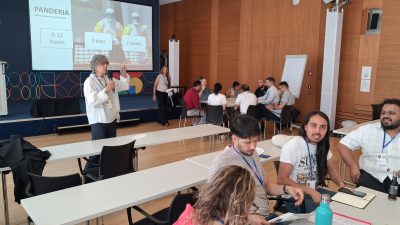
Science Advice Workshop: The interactive workshop “Science Advice in Challenging Settings”, jointly organised by the GYA and INGSA-Europe, was chaired by Claire Craig (INGSA VP (Evidence) and INGSA-Europe Chair) alongside Flavia Schlegel (Founder and CEO of Science Governance Partnership, Member of INGSA-Europe Board). Drawing on INGSA-Europe’s work on science advice under challenging political, institutional, and societal conditions, the workshop invited participants to explore how scientific evidence informs policymaking through a case-based simulation of real advisory challenges. By taking on different roles within science-policy systems, participants examined issues including politicisation, uncertainty, time pressure, and institutional constraints, while also discussing career pathways in science for policy and the opportunities and limitations of large language models in supporting evidence-informed decision-making. More information is available on the INGSA-Europe website here.
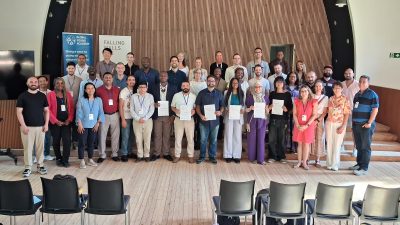
Falling Walls Lab: For the first time, the GYA hosted a Falling Walls Lab, where presenters pitched breakthrough ideas and research projects that combined scientific excellence with the potential for societal impact. Following the presentations, an expert jury selected GYA member Rita Esuru Okoroafor (Texas A&M University, USA) as the winner, who will now present her winning idea at the Falling Walls Science Summit in Berlin.
GYA Annual General Meeting (AGM)
GYA Co-Chairs Yensi Flores Bueso and Sam Chan Siok Yee welcomed all participants and inaugurated 33 new GYA members, who officially began their five-year terms. They then shared a message to the GYA from the Secretary-General of the United Nations, António Guterres, prepared for the AGM, which emphasised the importance of ethical and sustainable artificial intelligence, the value of international scientific collaboration, and the contribution the AGM discussions could make to the United Nations’ work.
Throughout the AGM week, GYA Activities Groups and projects presented their achievements and activities at the GYA Activities Fair, and during General Assembly sessions, GYA members discussed and generated ideas about the future of the GYA.
Recordings and photos
Browse pictures from the event here:
Recordings of the conference livestream from 1 July can be found here: July 1 Livestream: 2026 GYA International Conference of Young Scientists
- Welcome from the GYA and Constructor University
- Opening Discussion Panel – Strengthening Global Research Collaboration for Science as a Global Public Good
- Panel I – AI Governance for a Shared Future: Science, Policy, and Global Equity
- Panel II – Accelerating Discovery: AI’s Transformative Role in Natural Sciences and Engineering
A Conference Statement and in-depth report will be published in the coming months.
Partners, Funders, and Sponsors
The GYA extends its sincere thanks to the many individuals, working groups and GYA committees whose dedication and contributions made this memorable week in Bremen possible. We also thank the European Academies Science Advisory Council (EASAC), INGSA-Europe, and the German Academic Exchange Service (DAAD) for their valuable contributions to the programme. Finally, the GYA gratefully acknowledges the following funders and sponsors for their generous support of participant travel and local event costs: