

OPEN NOW: Global CallWomen in Science Without Borders is expanding! 🌍Membership is open to males and females worldwide:Membership is open now for males and females globally to reach all stakeholders (i.e. all scientific communities and science related decision makers, industry, NGOs, media, etc) as possible future participants in our activities worldwide whether as reviewers, speakers, or possible hosts for our activities Accordingly, please fill in the whole following registration form with its all fieldsRegister here: forms.gle/ZH3ZQFhrayumhLzJAMore information: learn more about Women in Science Without Borders and its regular activities at:🌐 WISWB Website: women-in-science-without-borders.network/🌱 Science for Humanity Foundation – Egypt: scienceforhumanityfoundationegypt.org/📅 World Forum for Women in Science – Hiroshima 2026: pub.confit.atlas.jp/en/event/wfws2026/content/speakerOnly for further inquiries, please contact: or Facebook page: www.facebook.com/WISWBINITIATIVEالتسجيل مفتوح الآن: المرأة في العلوم بلا حدود تتوسّع! 🌍باب العضوية مفتوح للرجال والنساء في جميع أنحاء العالم.التسجيل من هنا: forms.gle/ZH3ZQFhrayumhLzJAلمزيد من المعلومات: تعرّفوا أكثر على المرأة في العلوم بلا حدود وأنشطتها المنتظمة عبر:🌐 موقع WISWB الإلكتروني: women-in-science-without-borders.network/🌱 مؤسسة العلم من أجل الإنسانية – مصر: scienceforhumanityfoundationegypt.org/📅 المنتدى العالمي للمرأة في العلوم – هيروشيما 2026: pub.confit.atlas.jp/en/event/wfws2026/content/speaker
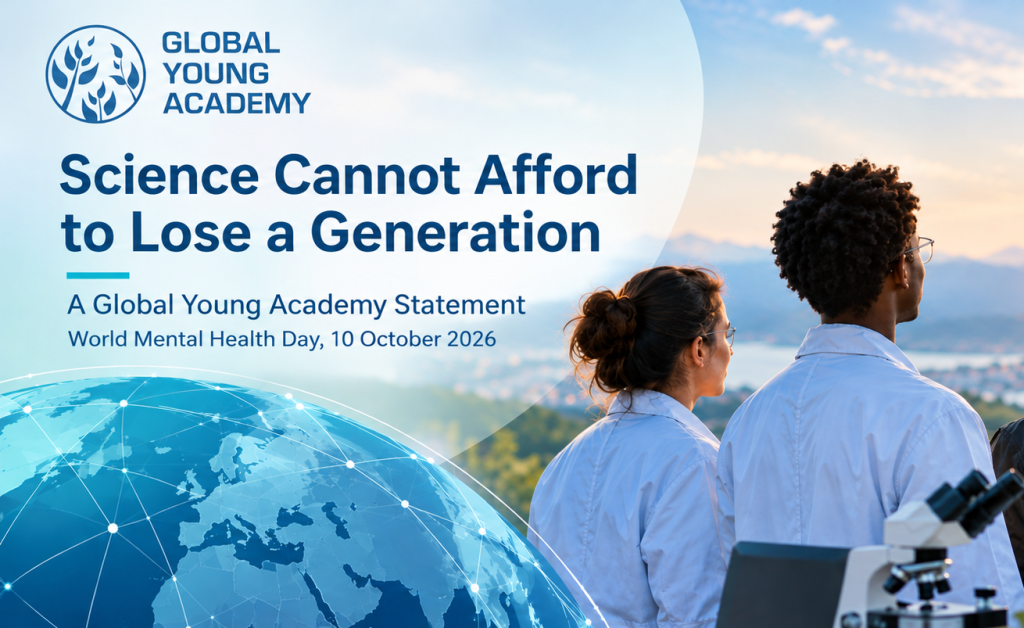
On World Mental Health Day, the GYA Statement "Science Cannot Afford to Lose a Generation" calls attention to a crisis unfolding within the institutions that produce scientific knowledge.Nearly 30% of #ECRs report elevated psychological distress, according to a systematic review and meta-analysis published in @Nature Human Behaviour in June 2026.Behind these figures lies a systemic challenge: short-term contracts, delayed funding decisions, unclear career progression, and inadequate institutional support are undermining the sustainability of research careers.Supporting #ECRs is not just a matter of individual well-being. It is an investment in the future of science itself.What changes must research institutions prioritise to make scientific careers more sustainable?Read the Statement here: globalyoungacademy.net/gya-statement-science-cannot-afford-to-lose-a-generation/#Science #MentalHealth #ECRs #ResearchPolicy #AcademicCareers
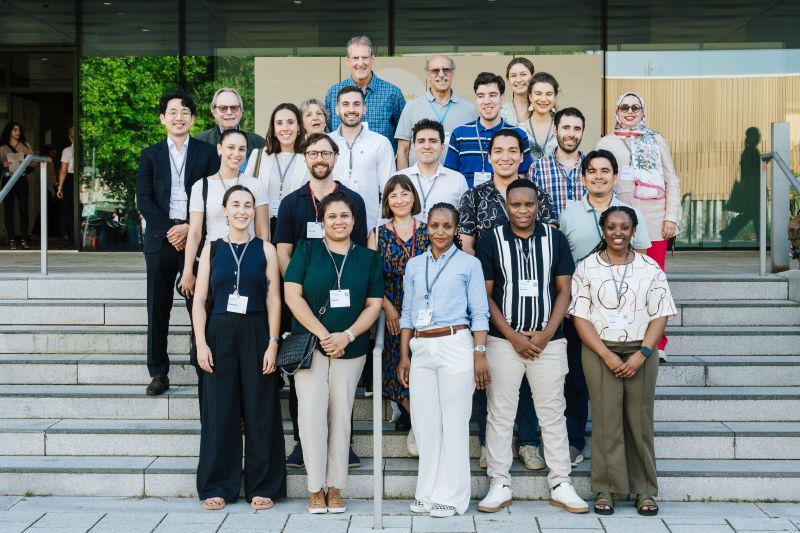
Nine GYA members and alumni (Dalal Najib, Mirabbos Hojamberdiev, Mitsunobu Kano, Natalia Montellano Duran, Patricia Silveyra, Dr. Pooja Devi Sharma, Thashree Marimuthu, Wibool Piyawattanametha, and Yoko Shimpuku) attended and contributed to the 23rd Science and Technology in Society (STS) Forum, held in Kyoto, Japan, from 4-6 October 2026. The annual STS forum brings together scientists, policymakers, representatives of international organizations, and industry leaders from around the world to address major global challenges, including artificial intelligence, global health, climate change, sustainability, and renewable energy. Throughout the three-day meeting, GYA members and alumni, as young scientists, shared their perspectives and expertise in discussions across the forum. The event also offered a valuable opportunity to connect with colleagues, exchange ideas, and build new international collaborations not only with representatives of academia but also with policymakers and industry.
This content isn't available right now
When this happens, it's usually because the owner only shared it with a small group of people, changed who can see it or it's been deleted.