
Download the full Statement here.
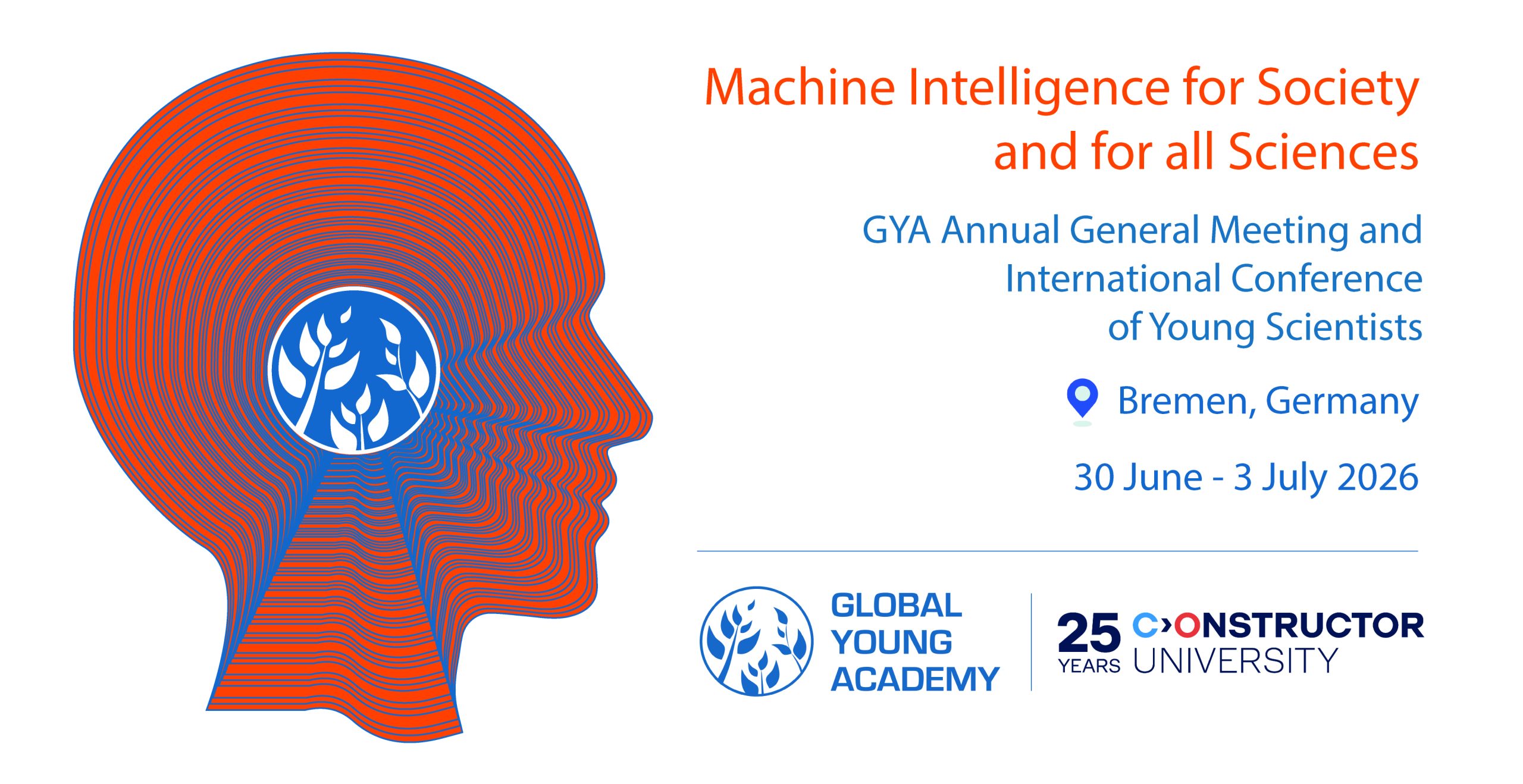
In July 2026, the GYA held its International Conference of Young Scientists on the theme “Machine Intelligence for Society and for All Sciences”. The Conference brought together more than 200 participants from over 60 countries at Constructor University in Bremen, Germany, the host institution for the event.
Over two days, five public sessions examined how artificial intelligence is reshaping research itself, from the governance frameworks designed to guide its use to the publishing systems through which research is shared. Across these discussions, participants returned to questions of equity, access and the role of early- and mid-career researchers in decisions that will shape their working lives.
The resulting 2026 International Conference of Young Scientists Statement, released today, reaffirms the GYA’s commitment to equitable and inclusive AI governance, open and accessible research, and meaningful participation of early- and mid-career researchers in shaping the policies and practices that will govern AI in science.
The recommendations of the Statement are intended for scientists and scholars across all generations, scientific organizations, industry representatives, and policymakers aiming to empower science to foster global change.
Key recommendations from respective panel topics include:
Involve early- and mid-career researchers in AI policy from the outset
- Science funders, publishers, research organisations, and regulators should systematically involve EMCRs in the development, implementation, and review of AI-related policies affecting research, as full participants.
- Review and input periods should be open while proposals are still genuinely open to change, and not be confined to formal commenting periods on near-final text versions.
Address structural inequalities in access to AI-enabled research
- AI governance should promote equitable access to research infrastructure, including shared and publicly governed computing capacity and open models.
- It should require transparency in the use of research data, including data resulting from researchers’ own use of publishing and AI platforms.
- AI should support publishing models that serve the public interest rather than deepen existing disparities.
The public conference of the 2026 GYA Annual General Meeting and International Conference of Young Scientists demonstrated that machine intelligence is not only changing research practice but also exposing broader questions about how science is governed, evaluated, and shared. Discussions spanning AI governance, scientific discovery, scholarly publishing, science diplomacy, research collaboration, and the humanities converged on a common conclusion: AI policy must be developed alongside the researchers and communities it will affect.
Download the full Statement here.
About the GYA
The vision of the GYA is science for all, science for the future, and its mission is to give voice to young scientists and researchers around the world. Founded in 2010, the GYA is an independent science academy of outstanding early- to mid-career researchers from six continents, selected across disciplines on the basis of academic excellence and commitment to engage with society. GYA members serve five-year terms, and the Academy presently counts members from close to 100 countries. The GYA’s administrative Office is publicly funded and hosted at the German National Academy of Sciences Leopoldina, and its activities are supported by a range of international public and private funders.